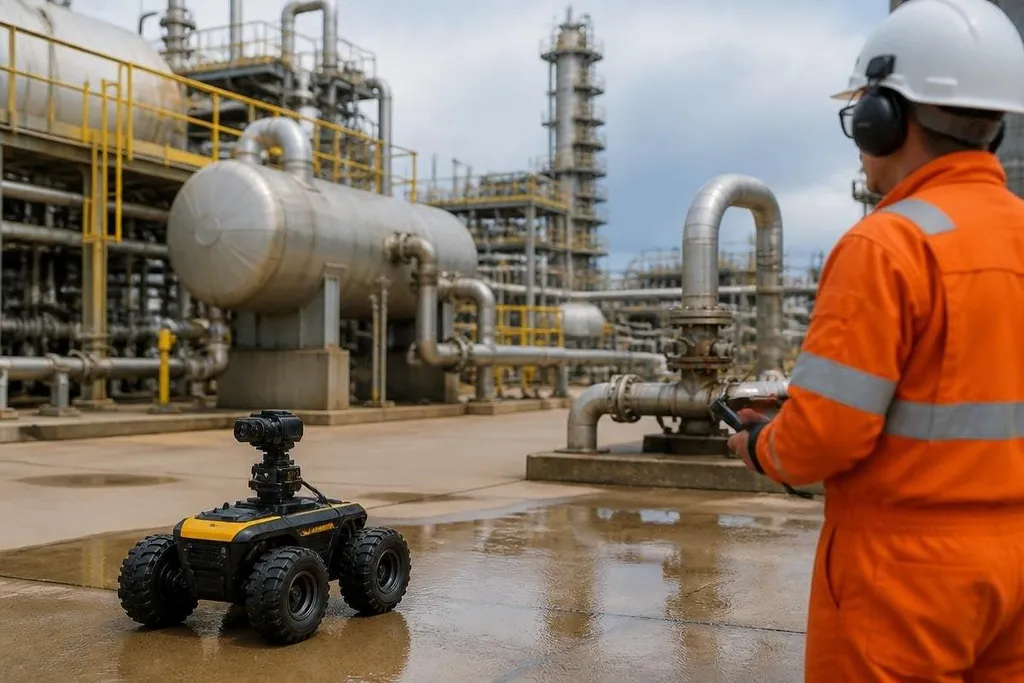
Oil and gas robots are moving into inspection, maintenance, and emergency work where heat, gas, height, water, or distance puts people at risk. Their value comes from keeping a person away from the first inspection pass while collecting data that a technician can review.
- Inspection: cameras, methane sensors, and ultrasonic tools can check equipment without sending a person into every space.
- Remote work: remotely operated vehicles can inspect underwater structures from a vessel.
- Limits: robots still need trained people, clear access plans, and a safe way to recover them.
The jobs robots can handle
A robot can inspect pipes, storage tanks, flare systems, pressure equipment, and offshore structures. The exact machine depends on the site. A wheeled robot may move across a plant floor, while a tracked robot can handle rough ground and stairs.
Small crawlers can move along pipework or inside tanks. Their cameras show corrosion, cracks, loose fittings, and blocked sections. Ultrasonic testing adds a measurement of wall thickness, which helps a technician decide whether equipment needs repair.
Methane sensing is another useful task. A robot carrying a gas sensor can check areas around valves, joints, and equipment without asking a worker to walk through every possible leak point. The robot does not make the repair. It helps the crew find where to look first.
Offshore and underwater work
Offshore oil and gas sites create a different problem. Structures below the waterline are hard to reach, and sending divers adds planning, weather, and safety limits.
A remotely operated vehicle, or ROV, stays connected to a surface vessel through a cable. The cable sends power and control signals while carrying video back to the operator. An ROV can inspect subsea pipelines, risers, valves, and the legs of an offshore platform.
An autonomous underwater vehicle, or AUV, works without a live control cable during its mission. It can follow a planned route and collect sonar or camera data. The crew still needs to launch it, recover it, check the data, and respond to anything it finds.
Oil and gas sites put robots near heat, pressure, water, and poor access, so a lab demo leaves the work conditions untested. For an operator choosing an inspection system, field reports on oil and gas robots should name the site, task, test date, sensor, and measured result. That record gives the next section something concrete to examine.
Why the data matters
A robot’s camera feed has limited value if nobody can compare it with earlier inspections. The useful system records where the robot went, what sensor it used, and which part of the asset appears damaged.
That record can help a maintenance team compare the same valve or pipe section over time. It can also reduce the need for repeat visits when the first inspection collected enough detail. The result depends on lighting, sensor range, robot control, and the quality of the review process.
Robots also reduce exposure to confined spaces. A tank may contain harmful gas or have poor airflow. A robot can enter first, but a person still needs to set the entry rules and confirm that the machine can be recovered if it stops.
Where robots still fall short
These sites are difficult places for machines. Floors may be wet or uneven. Metal structures can block wireless signals. Dust, heat, water, and chemicals can damage sensors or motors.
A robot that works on a clean test floor may struggle around hoses, grating, steps, and narrow gaps. Autonomy also has limits. If the system cannot recognize a new obstacle, a remote operator may need to take control.
The robot’s safety rating matters too. A machine used near flammable gas needs protection against ignition. The site may also require special permits, inspection methods, data storage, and operator training.
Those requirements can make setup slower than the sales material suggests.
I’d put inspection and remote data collection ahead of fully autonomous repair. Finding a problem from a safe distance is a clear use; asking a robot to make a complex repair without close supervision remains unproven.
A practical buying checklist
Before choosing a robot for an oil or gas site, check:
- The exact task: define the asset, inspection method, access route, and result the team needs.
- Site conditions: list heat, water, dust, gas, stairs, narrow gaps, and weak radio coverage.
- Sensor output: confirm that the camera, gas sensor, sonar, or ultrasonic tool records usable data.
- Recovery plan: decide how staff will retrieve the robot after a motor fault, lost signal, or blocked route.
- Safety approval: check the machine’s rating and the site rules before any field trial begins.
- Human review: assign a trained person to inspect the data and decide what work follows.
Oil and gas robots will matter most in tasks that are repetitive, remote, or unsafe for a first visit. The next test is practical: can a machine collect data good enough for a maintenance decision, under the same site conditions it will face after the demo ends?